Initial Consultation
The initial consultation records suspected sightings, recent travel, used-furniture purchases, property moves, and previous bed bug treatment. We also identify affected rooms, sleeping areas, and possible introduction points.
Bed Bug Control from Kharadi Pest Control identifies active infestations, treats confirmed harbourages, and monitors affected areas for remaining activity. Our technicians inspect residential and commercial properties in Kharadi, Pune, then recommend a treatment plan based on the evidence, infestation severity, affected rooms, property layout, and previous treatment history.
Bed bugs can spread through luggage, clothing, furniture, and adjoining spaces. Early inspection helps contain activity before the infestation reaches additional sleeping or resting areas.
Request a bed bug inspection or contact Kharadi Pest Control to schedule service.
Evidence of a possible infestation often appears near mattresses, bed frames, headboards, box springs, and upholstered furniture. Bed bugs are flat, wingless, reddish-brown parasitic insects that usually hide near places where people sleep or rest.
Check for:
Bed bug bites do not independently confirm an infestation. Reactions vary between individuals, may appear later, and can resemble bites or skin irritation caused by other sources. Physical evidence or professional identification provides a more reliable answer.
Live insects, shed exoskeletons, rusty-coloured spots, and a musty odour are common signs of bed bugs.
The initial consultation records suspected sightings, recent travel, used-furniture purchases, property moves, and previous bed bug treatment. We also identify affected rooms, sleeping areas, and possible introduction points.
The detailed visual inspection examines the places where bed bugs commonly hide. A technician may inspect:
The technician looks for bed bugs at the egg, nymph, and adult life stages. Findings such as live insects, eggshells, shed skins, faecal spots, stains, and occupied harbourages are documented.
The infestation assessment confirms pest identity, maps detected activity, and determines how far the infestation may have spread. Kharadi Pest Control then recommends a property-specific plan that considers accessibility, occupancy, preparation constraints, treatment history, and the proximity of harbourages to sleeping areas.
Integrated pest management combines inspection, physical controls, non-chemical measures, carefully selected pesticides, resident responsibilities, monitoring, and follow-up criteria. This approach treats confirmed activity while reducing the chance that hidden bugs or eggs remain undetected.
Bed bug control should not depend on one product or method. The recommended combination depends on the property and inspection findings.
Targeted insecticide treatment applies registered products to permitted cracks, crevices, harbourages, and surrounding risk areas. A trained technician selects the formulation and application method according to the infestation, surface, labelled use site, residual requirements, and safety directions.
Products are applied according to their labels. Mattresses, furniture, occupied spaces, and sensitive areas are treated only when the product label and treatment plan permit the application.
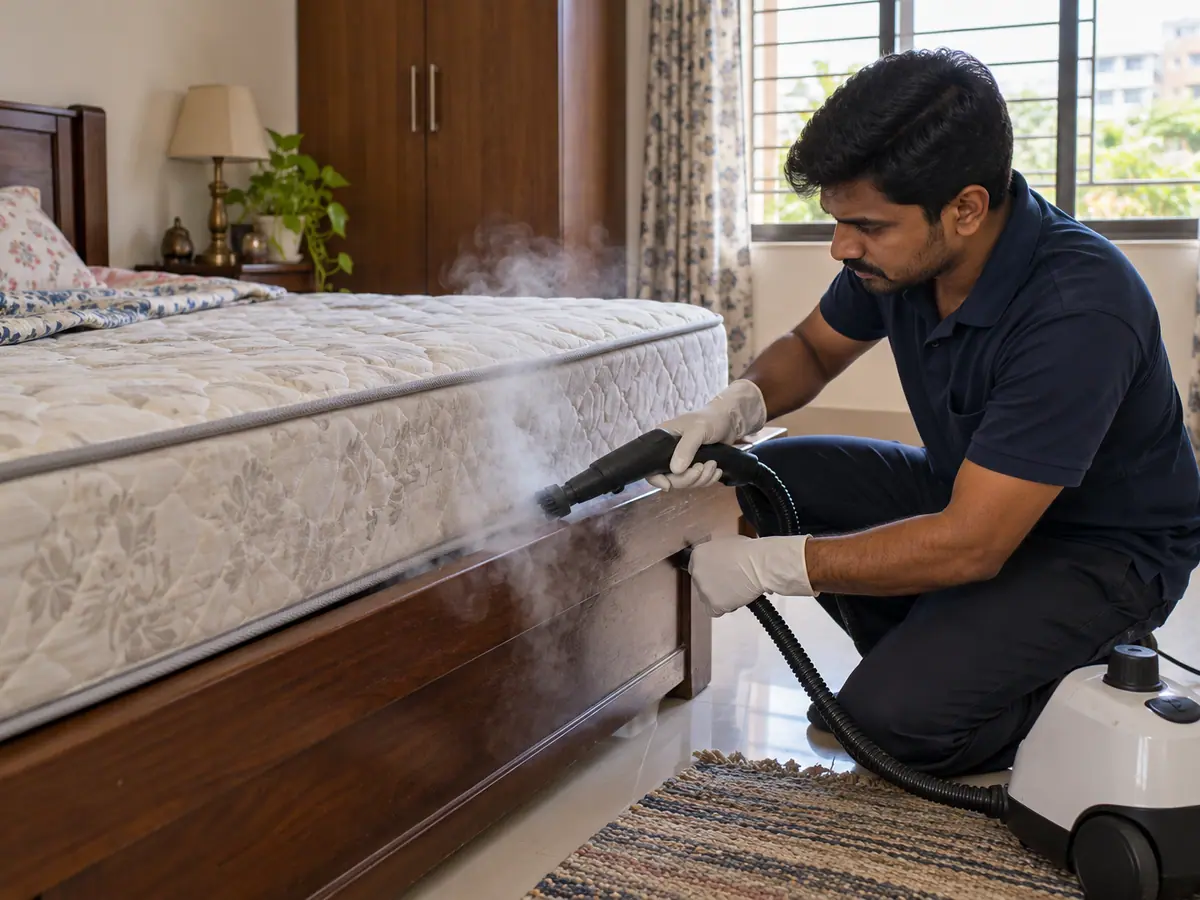
Steam, vacuuming, and physical controls can remove or treat visible activity on suitable surfaces. Depending on access and material suitability, the plan may include:
Vacuum contents must be contained and discarded according to the technician’s instructions.
Combination treatment joins the methods supported by the inspection evidence. The plan may include targeted pesticides, steam, vacuuming, encasements, interceptors, physical removal, and follow-up monitoring.
Professional heat treatment is discussed only when it is available and suitable for the property. Controlled heat requires trained operators, temperature sensors, treatment-area monitoring, and protection of heat-sensitive belongings. Ordinary space heaters are not a safe substitute for professional equipment.
Preparing for service gives the technician clear access to beds, furniture, walls, skirting boards, and suspected harbourages. Follow the preparation instructions supplied for your property, since requirements can differ by treatment method.
Before the appointment:
Do not discard or relocate a mattress, box spring, or sofa before it has been assessed. Moving infested furniture through the property may spread bed bugs to new areas.
Proper preparation supports access, containment, and treatment.
The service process confirms activity, treats identified harbourages, and establishes clear aftercare steps.
Re-entry time depends on the products and methods used. Customers should follow the technician’s written instructions rather than relying on a general time estimate.
Follow-up and monitoring determine whether activity remains after the initial service. A technician may reinspect treated rooms and adjacent areas, examine interceptor traps, record new evidence, and decide whether retreatment is required.
Bed bug eggs, inaccessible harbourages, and bugs located outside the initial treatment area can make additional visits necessary. A single visit is not automatically sufficient for every infestation. Professional control often requires multiple visits and continued monitoring.
Homes and apartments require close inspection of bedrooms, shared living areas, furniture, and adjoining spaces. In multi-unit housing, activity in nearby units may need to be assessed with the property manager’s cooperation.
Hotels and hospitality properties require discreet room inspections, checks of adjoining rooms, accurate documentation, and defined monitoring procedures. Treatment planning should also account for operating schedules and service disruption.
Dormitories and care facilities contain multiple sleeping areas and resident belongings. Successful control requires coordinated preparation, clear communication, item containment, and systematic follow-up.
Offices and commercial buildings may receive bed bugs through staff belongings, visitors, deliveries, or upholstered furniture. Localized inspection and monitoring can identify suspected introduction points before activity spreads.
Service eligibility depends on the property type, location, access, and treatment requirements. Contact Kharadi Pest Control to confirm coverage.
Kharadi Pest Control provides a clear, evidence-led process for suspected and confirmed infestations. Customers receive:
Any warranty, included follow-up, exclusions, and customer responsibilities should be confirmed in the written service terms.
Prevention reduces the risk of introducing or spreading bed bugs, although it cannot stop every occurrence.
Live insects, eggs, shed skins, faecal spots, rusty stains, and occupied harbourages can confirm activity. A professional bed bug inspection can identify the pest and differentiate it from fleas, carpet beetles, and other insects.
Yes. Bed bugs can hide in box springs, frames, headboards, sofas, chairs, skirting boards, wall junctions, cracks, screw holes, and belongings near resting areas.
No. Bed bug bites vary in appearance and timing, and some people show no visible reaction. Physical evidence provides a stronger basis for identification.
Professional treatment starts with inspection and infestation mapping. The technician then targets confirmed harbourages with appropriate physical, non-chemical, and label-compliant pesticide controls before monitoring the results.
Neither method is automatically best for every property. Infestation distribution, access, belongings, construction, occupancy, and preparation requirements determine the appropriate treatment plan.
Follow the property-specific checklist supplied by the technician. Common steps include drying suitable textiles, containing processed belongings, reducing clutter, and providing access to beds, furniture, walls, and skirting boards.
The number of visits depends on infestation severity, distribution, preparation, access, adjoining-unit activity, and monitoring results. Some infestations require repeat treatment.
Not necessarily. Inspection determines whether an item can be treated, encased, monitored, or should be discarded. Do not move suspected furniture through the property without professional advice.
Registered products must be applied according to their labels. Tell the technician about children, pets, aquariums, allergies, and other sensitive conditions before treatment, then follow all vacancy and re-entry instructions.
Return time depends on the selected products and treatment method. The technician will provide specific re-entry instructions after service.
Yes. Bed bugs may travel through cracks, wall gaps, shared services, hallways, belongings, and furniture. Adjacent areas may require inspection when evidence indicates possible spread.
Cost depends on the property size, number of affected rooms, infestation severity, treatment method, preparation needs, and required follow-ups. Kharadi Pest Control provides an estimate after reviewing the property and available evidence.
Schedule a bed bug inspection with Kharadi Pest Control if you have found live insects, mattress spots, shed skins, eggs, or unexplained activity near a sleeping area. We will assess the evidence, explain the available treatment options, and provide a plan for control, monitoring, and follow-up.
Service area: Kharadi, Pune
Phone: +91 80693 77800