Skip to content
Kharadi
Pest Control

Commercial Pest Control Services

Commercial Pest Control Services from Kharadi Pest Control help businesses inspect, treat, monitor, and prevent pest activity through a site-specific service plan. We serve commercial properties in Kharadi, Pune, with discreet scheduling for single facilities and multi-location operations. Each programme considers the pest species, activity level, operating hours, sensitive areas, access restrictions, and reporting requirements.

Protect Your Business from Pest Activity

Protect your business from pest activity before it affects products, property, people, or daily operations. Rats, cockroaches, ants, flies, and stored-product insects can contaminate surfaces, damage equipment, trigger complaints, interrupt work, and contribute to inspection or audit findings.

Recurring infestations often indicate an unresolved entry point, breeding source, moisture problem, sanitation condition, or accessible food supply. Kharadi Pest Control traces these contributing conditions and recommends practical corrective actions. No treatment can promise permanent elimination, but regular inspection, prevention, and monitoring can reduce pest pressure and identify new activity early.

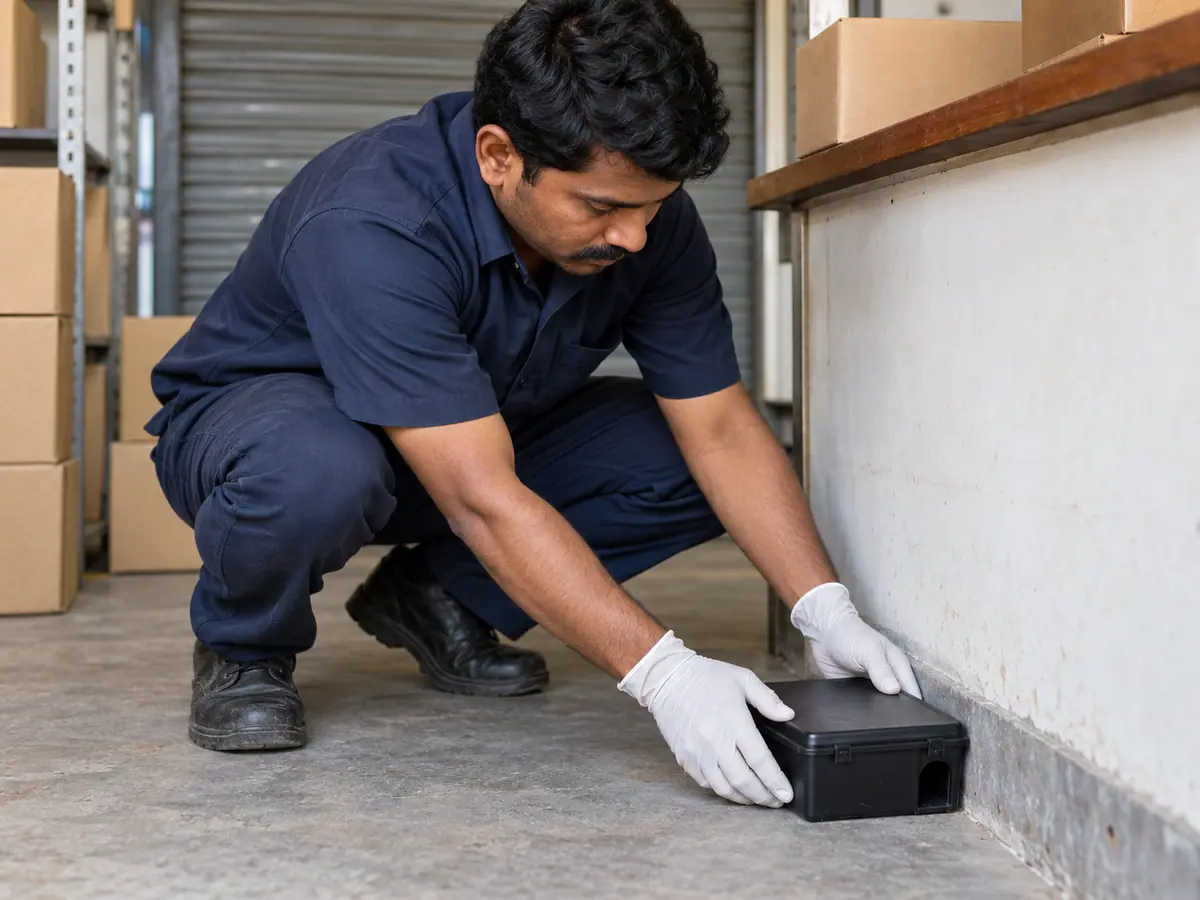
Technician placing a rodent bait station along a shop wall

Commercial Pests We Manage

Commercial pests require accurate identification and controls suited to the facility. Our commercial pest-management services focus on common pest risks found in offices, restaurants, shops, hotels, warehouses, kitchens, and industrial premises.

Rodent Control

Rodent control targets rats and mice inside buildings and around exterior areas. A technician inspects for droppings, gnaw marks, tracks, rub marks, nesting material, damaged stock, and known access points.

The commercial rodent-control plan may include traps, secured or tamper-resistant bait stations where appropriate, device inspections, entry-point identification, and activity monitoring. Findings help determine where rodents travel, feed, nest, and enter the property.

Cockroach Control

Cockroach control identifies the species, harbourage, moisture source, food source, and distribution of activity. German cockroaches commonly occupy warm indoor areas, while other species may enter through drains, utility spaces, waste zones, or exterior openings.

The commercial cockroach treatment may combine gel baits, monitors, crack-and-crevice applications, targeted treatments, and sanitation recommendations. Technicians also inspect plumbing penetrations, equipment voids, drains, grease deposits, and hard-to-clean spaces.

Ant Control

Ant control traces trails to nests, access points, moisture sources, and available food. Species identification matters because different ants respond to different baiting, exclusion, and exterior-management methods.

The treatment plan may place targeted baits along active routes, seal suitable entry points, treat selected exterior areas, and recommend changes that deny ants food, water, or shelter.

Fly Management

Fly management locates the conditions that allow house flies, fruit flies, drain flies, and other flying insects to breed or enter. Inspections cover drains, waste areas, bars, kitchens, receiving zones, produce storage, doorways, and the building perimeter.

A commercial fly-control programme may include source removal, drain-remediation recommendations, insect light traps, glue-board inspection, capture counts, exclusion, and sanitation corrections. Insect-control devices must be positioned carefully to avoid attracting insects towards exposed food or sensitive work areas.

Stored-Product Pest Control

Stored-product pest control addresses beetles, moths, weevils, larvae, and infested commodities in food-storage, retail, processing, and warehouse environments. The inspection links the pest species to the affected product, storage condition, life stage, and distribution.

Controls may include product inspection, source identification, pheromone monitoring, isolation or disposal recommendations, stock rotation, cleaning, and follow-up checks. Facility personnel remain responsible for product-disposition decisions and applicable food-safety procedures.

Industries and Facilities We Serve

Industries and facilities receive pest-control plans based on their layout, operating risk, occupancy, and pest pressure.

Restaurants and Food-Service Facilities

Restaurant pest control covers kitchens, dining rooms, bars, drains, dry stores, grease areas, waste zones, and delivery entrances. The programme targets pests while coordinating treatment around food preparation, cleaning schedules, and customer-facing hours.

Food Processing and Warehousing

Food-processing pest control and warehouse pest management inspect stored products, rack systems, loading docks, raw materials, receiving activity, and perimeter exposure. Monitoring devices, corrective actions, stock recommendations, and service records support internal reviews and facility inspections.

Offices and Commercial Buildings

Office-building pest control protects workspaces, break rooms, restrooms, utility areas, tenant units, and shared waste areas. Discreet appointments can be coordinated around staff, visitors, and building-access rules.

Retail Stores and Shopping Centres

Retail pest-control services inspect sales floors, stockrooms, receiving bays, food sections, shared walls, and customer-facing spaces. The technician tracks how stock movement, adjoining tenants, and deliveries affect pest activity.

Hotels and Hospitality Properties

Hotel pest-control services cover guest rooms, kitchens, laundry rooms, housekeeping stores, common areas, and waste-handling zones. Discreet response and clear communication help management coordinate access without unnecessary disruption.

Healthcare and Senior-Care Facilities

Healthcare facility pest management considers patient areas, sensitive populations, food-service zones, utility spaces, and treatment restrictions. Methods are selected after reviewing site conditions, access controls, and the facility’s safety procedures.

Schools and Childcare Facilities

School pest-control programmes combine inspection, monitoring, prevention, staff communication, and carefully scheduled treatment. Every service should follow the facility’s pesticide policy and applicable local requirements.

Manufacturing and Industrial Sites

Industrial pest control inspects production areas, machinery voids, raw-material storage, utility penetrations, loading zones, and finished-goods stores. The plan assigns monitoring locations and corrective actions according to operational risk.

Property Management and Multi-Site Businesses

Multi-site pest-management programmes can standardise inspection protocols, service schedules, escalation steps, and reporting across multiple premises. Consolidated records allow property managers to compare pest trends and track unresolved corrective actions.

Our Commercial Pest-Control Process

Our commercial pest-control process connects each finding with a treatment, monitoring action, or prevention recommendation.

1

Facility Inspection

Facility inspection examines interior rooms, exterior areas, active pests, pest evidence, entry points, harbourages, food sources, standing water, waste areas, drains, plumbing penetrations, loading bays, garden areas, and existing monitoring devices.

The resulting pest inspection records the species observed, activity level, affected zone, probable source, conducive conditions, and repair priorities.

2

Pest Identification and Risk Assessment

Pest identification and risk assessment determine what is present, where it breeds, how widely it has spread, and what operational risk it creates. The technician assesses infestation severity and establishes action thresholds when they suit the pest and facility.

3

Customized Treatment Plan

A customized treatment plan assigns controls to the target pest and application site. Depending on inspection findings, the plan may include:

  • Trapping or baiting
  • Crack-and-crevice applications
  • Targeted residual treatment
  • Insect growth regulators
  • Dust treatment in appropriate voids
  • Mechanical removal
  • Exclusion and gap sealing
  • Sanitation, storage, or maintenance recommendations

Product selection, access limits, preparation, and re-entry instructions are communicated before treatment where applicable.

4

Monitoring and Follow-Up

Monitoring and follow-up measure whether pest activity is declining, shifting, or returning. Scheduled visits may include device checks, activity counts, trap resetting, bait replenishment, trend review, treatment adjustment, and follow-up inspection.

Priority response availability and expected response time should be confirmed when requesting a proposal.

5

Reporting and Prevention

Reporting and prevention connect service records with corrective action. Available records may document the service date, technician, devices inspected, findings, products and methods used, treatment areas, pest counts, and structural or sanitation recommendations.

This process follows practical integrated pest management principles: identify the pest, monitor activity, set suitable thresholds, prevent access, apply targeted controls, and evaluate the result.

Integrated Pest Management for Commercial Facilities

Integrated pest management for commercial facilities combines inspection, accurate identification, monitoring, prevention, exclusion, and targeted treatment. IPM is a continuing decision process, not a single pesticide application.

A commercial IPM programme may:

  • Record pest sightings and device activity
  • Remove accessible food, water, and shelter
  • Seal structural openings
  • Modify pest-supporting conditions
  • Set action thresholds where appropriate
  • Select lower-risk, targeted controls when justified
  • Review results and revise the pest-management plan

Targeted pesticide use may form part of the programme when inspection and monitoring support that decision. The treatment method must suit the pest, application site, label directions, and applicable Indian and Maharashtra requirements.

Commercial Pest Prevention and Exclusion

Commercial pest prevention and exclusion reduce the conditions that support recurring activity. Kharadi Pest Control can identify structural, sanitation, storage, and maintenance issues for the responsible facility team to correct.

Recommended actions may include:

  • Seal cracks, wall gaps, and utility penetrations
  • Install or repair door gap seals and window screens
  • Repair vents and exterior openings
  • Correct leaks, standing water, and drainage problems
  • Keep waste containers closed, clean, and positioned appropriately
  • Remove clutter and inaccessible harbourage
  • Store food and inventory off the floor where suitable
  • Rotate stock and inspect incoming goods
  • Trim vegetation away from the building perimeter
  • Protect loading docks and frequently opened doors
  • Train employees to log sightings with the date and exact location

Protected openings, tight-fitting doors, screens, and correctly positioned insect-control devices are common preventive controls for food premises. Pune businesses must follow requirements issued by the relevant Indian, Maharashtra, and local authorities.

Documentation for Audits and Facility Inspections

Documentation for audits and facility inspections creates a traceable service history without implying automatic approval, certification, or regulatory compliance.

Depending on the agreed reporting scope, records may include:

  • Inspection findings and proof of service
  • Device IDs, locations, conditions, and activity counts
  • Pest-sighting logs
  • Treatments, application sites, and products used
  • Safety data sheets where applicable
  • Technician notes
  • Structural and sanitation recommendations
  • Corrective-action priorities and status
  • Pest-activity trends for multi-site accounts

Why Businesses Choose Kharadi Pest Control

Businesses choose Kharadi Pest Control for site-specific inspections, direct recommendations, discreet service coordination, and treatment plans based on observed pest activity. We support one-time corrective work and scheduled pest-control maintenance for commercial properties in Kharadi, Pune.

Before accepting a proposal, confirm the service scope, technician credentials, product details, response arrangements, reporting format, exclusions, and follow-up terms.

Commercial Pest-Control Plans

Commercial pest-control plans match service frequency to facility risk, pest pressure, property size, and operating conditions. Available arrangements may include:

  • One-time corrective treatment
  • Monthly pest control for businesses
  • Weekly or biweekly monitoring where required
  • Seasonal pest prevention
  • Priority treatment for active infestations
  • Commercial pest-control contracts
  • Multi-location pest-management programmes

Commercial pest-control cost depends on the floor area, facility type, number of locations, pest species, infestation severity, treatment method, visit frequency, access restrictions, and documentation requirements. A site inspection allows Kharadi Pest Control to define the treatment scope and prepare a relevant commercial pest-control quote.

Frequently Asked Questions

What does commercial pest control include?

Commercial pest control includes inspection, pest identification, risk assessment, treatment, monitoring, exclusion advice, prevention recommendations, and agreed service records.

How often should a commercial property receive pest-control service?

Service frequency depends on pest pressure, facility use, sanitation conditions, neighbouring activity, sensitive areas, and inspection requirements. High-risk food or storage premises may need more frequent monitoring than a low-risk office.

What is integrated pest management?

Integrated pest management combines identification, monitoring, action thresholds, prevention, physical controls, and targeted pesticide use when justified.

Can treatments be performed outside business hours?

Appointments may be coordinated around operating hours, staff access, preparation needs, and technician availability. Confirm the preferred service time when requesting an inspection.

Are treatments safe around employees and customers?

Treatment safety depends on the product, method, application site, preparation, and label instructions. The technician should explain access restrictions, precautions, and re-entry requirements before application.

How do you service food-handling or sensitive environments?

Sensitive-site service begins with a risk review. Technicians coordinate access, protect food and sensitive areas, select suitable methods, and document the agreed controls.

Do you provide pest-control records for audits?

Reporting requirements can be included in the proposal. Ask whether you need service reports, device maps, pest-sighting records, product-use details, corrective actions, or trend data.

Can you manage multiple business locations?

Multi-site service may include standard inspection protocols, consolidated schedules, escalation procedures, consistent reporting, and location-by-location trend comparisons.

How quickly can a technician respond?

Response time depends on location, urgency, technician availability, pest type, and access requirements. State the operational risk when requesting service.

What should employees do before and after treatment?

Employees should follow the preparation, access, cleaning, and re-entry instructions issued for the selected treatment. They should also report new pest sightings with the time and exact location.

How much does commercial pest control cost?

Pricing depends on the property, pest, infestation level, treatment scope, number of visits, and reporting needs. Request a commercial pest inspection for an accurate proposal.

Do you offer emergency commercial pest removal?

Urgent service availability depends on the pest, site location, access, and current schedule. Contact Kharadi Pest Control and describe the activity, affected area, and business risk.

Schedule a Commercial Pest Inspection

Schedule a Commercial Pest Inspection when you find droppings, live insects, damaged stock, unusual odours, pest sightings, nesting material, or recurring activity. Early inspection helps locate the source, restrict the affected area, and define the next action.

Call +91 80693 77800 or submit the request form with:

  • Facility type
  • Service address
  • Approximate floor area
  • Number of locations
  • Pest observed
  • Location of activity
  • Preferred service time
  • Access restrictions
  • Reporting requirements
  • Level of urgency

Book an inspection

Call Now WhatsApp