Skip to content
Kharadi
Pest Control

Professional Rodent Control Services in Kharadi, Pune

Rodent control services from Kharadi Pest Control identify, remove, and prevent rat and mouse activity in homes and businesses. Our inspection-led service combines rodent trapping, entry-point sealing, sanitation guidance, and follow-up monitoring to protect food, belongings, wiring, and occupied spaces.

If you have found droppings, heard scratching sounds, or noticed rodents in the kitchen, store room, false ceiling, or parking area, arrange a professional rodent inspection.

Evidence of a Rat or Mouse Infestation

Rodent activity is often detected through physical evidence before a rat or mouse is seen. A technician can assess the evidence, trace travel routes, locate nesting areas, and distinguish current activity from older signs.

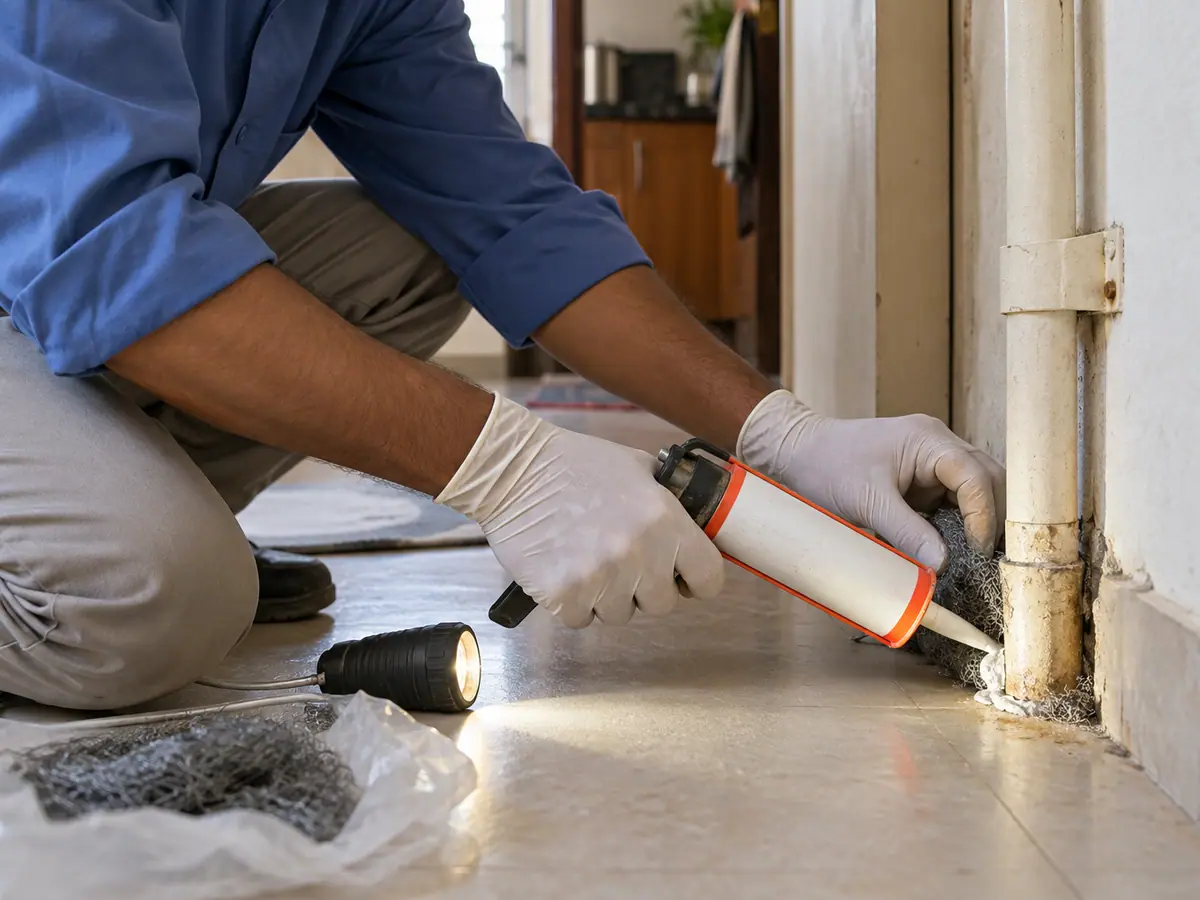
Technician sealing a gap around a pipe to block rat entry

Droppings

Rodent droppings may appear inside cabinets, behind appliances, near stored food, or beside pet-food containers. Their size, shape, quantity, location, and condition can help assess activity, but droppings alone should not be used to confirm the species.

Avoid sweeping or vacuuming dry droppings before receiving safe-cleanup guidance.

Gnaw Marks and Property Damage

Gnaw marks can appear on food packaging, timber, insulation, plastic, stored products, and electrical wiring. A rodent inspection records the material damaged, the mark size, its apparent age, and its relationship to a travel route.

Scratching and Movement Noises

Scratching sounds in walls, ceilings, and false ceilings often become more noticeable at night. The location and timing of the noise help the technician identify likely nesting or movement areas.

Nests, Burrows, Tracks, and Smudge Marks

Rodent nests may contain shredded paper, fabric, insulation, or other soft material. Rat burrows commonly occur near building edges, rubbish areas, storage corners, vegetation, and food sources.

Other evidence includes:

  • Footprints or tail marks in dusty areas
  • Dark rub marks along walls, beams, and established runways
  • Disturbed insulation or nesting material
  • Burrow openings close to a building
  • Repeated activity beside compound walls or utility routes

Odours and Sightings

Persistent musky odours, live rodents, or rodent carcasses require investigation. A daytime sighting does not prove the size of an infestation, but it can indicate active pressure and should be assessed promptly.

Droppings, gnawing, tracks, nests, burrows, noises, and rub marks are recognised signs of mouse or rat activity.

Rats and Mice We Control

The species assessment determines where devices are placed, which entry points are repaired, and how follow-up monitoring is performed.

House Mice

House mice have small bodies and can enter through narrow structural openings. They commonly nest indoors near food, warmth, and shelter, leaving small droppings, fine gnaw marks, tracks, and a musky odour.

Norway Rats

Norway rats have stocky bodies and usually operate near ground level. They may burrow beside building edges, stored wood, vegetation, drains, and rubbish areas or occupy ground floors and lower levels.

Roof Rats

Roof rats are agile climbers that may travel along trees, compound walls, cable lines, rooflines, and utility routes. They often occupy false ceilings and upper building levels and can avoid unfamiliar objects, so careful trap placement and consistent monitoring matter.

Species-specific treatment is provided when the rodent occurs within the property’s local environment.

Why Rodents Require Prompt Control

Rodents can contaminate food, damage property, and return when food, water, shelter, and entry points remain available.

Food and Surface Contamination

Rats and mice can contaminate packaging, preparation surfaces, kitchens, pantries, restaurants, and storage areas through droppings, urine, nesting material, and direct contact.

Damage to Buildings and Belongings

Rodents gnaw insulation, timber, plastic, containers, stored goods, and electrical wiring. Early inspection helps locate damage before activity spreads through concealed spaces.

Health and Cleanup Concerns

Rodents can carry pathogens and contaminate occupied areas, although every infestation does not cause illness. Safe containment, cleaning, disinfection, protective equipment, and waste disposal remain important when droppings or nesting material are present.

Recurring Activity

Rodent activity can return when open gaps, accessible food, standing water, clutter, or shelter remain. Removing individual rodents without correcting these conditions rarely provides dependable long-term control.

Our Rodent Control Process

Our rodent control process connects inspection, identification, removal, exclusion, sanitation, and monitoring in one site-specific plan.

1

Detailed Inspection

A technician inspects accessible interior and exterior areas, including:

  • Kitchens, storage rooms, parking areas, and utility spaces
  • False ceilings, terraces, roof spaces, and concealed gaps
  • Building edges, rooflines, doors, vents, pipes, and cable penetrations
  • Droppings, tracks, nests, burrows, gnaw marks, and runways
  • Food, water, clutter, vegetation, and possible harbourage
2

Species and Activity Assessment

The technician identifies the likely rodent type, documents active and historical evidence, traces feeding and nesting locations, and assesses the extent of the infestation. The assessment also considers children, pets, food exposure, non-target wildlife, access restrictions, and recurrence risks.

3

Site-Specific Control Plan

The control plan may include:

  • Strategic snap-trap placement
  • Approved trapping devices
  • Secured bait stations where appropriate
  • Rodent entry-point correction
  • Food and water source reduction
  • Nesting-site and clutter removal
  • Scheduled inspections and activity records
4

Rat and Mouse Removal

Rodent removal devices are placed along walls and identified travel routes. The technician checks, resets, secures, and repositions traps based on recorded activity.

Rodenticides are considered only when suitable for the property. Any product must be applied according to its label, target species, application site, and exposure controls.

5

Entry-Point Sealing

Rodent exclusion closes access routes around doors, vents, plumbing lines, cables, wall bases, roofs, and concealed gaps. Repairs may use metal screening, sheet metal, cement mortar, door gap seals, or suitable sealants reinforced with rodent-resistant material.

Mice can pass through an opening approximately 6 mm, or ¼ inch, wide. Small-gap inspection is therefore essential.

6

Sanitation and Habitat Correction

Sanitation recommendations remove the conditions that support rodent activity:

  • Store food and animal feed in sealed containers
  • Clean crumbs, spills, and grease
  • Secure rubbish and compost
  • Remove clutter and nesting material
  • Trim dense vegetation
  • Relocate or organise woodpiles
  • Correct accessible water sources
  • Remove pet food overnight
7

Follow-Up Monitoring

Follow-up service checks traps and stations, removes captured rodents, reinspects activity areas, and documents new evidence. The technician adjusts device placement, verifies repaired entry points, and recommends further corrective work when required.

Rodent Exclusion and Prevention

Rodent exclusion is a central part of long-term management. It blocks access while sanitation and habitat changes reduce the reasons rats and mice approach the property.

Common Entry Points

Frequently identified access routes include:

  • Gaps beneath doors and shutters
  • Openings around pipes, cables, and service lines
  • Damaged vents and screens
  • Wall cracks and construction gaps
  • Roof and false-ceiling defects

Rodent-Resistant Repairs

Effective rodent proofing may require metal screening, hardware cloth, sheet metal, mortar, door gap seals, and reinforced sealants. The correct material depends on the opening size, building surface, accessibility, and evidence of current use.

Residential Rodent Control

Residential rodent control protects flats, apartments, rented homes, independent houses, kitchens, pantries, store rooms, and false ceilings. Kharadi Pest Control plans device placement around the property’s occupancy, food-storage areas, children, pets, tenants, and access limitations.

Our residential services can include mouse removal, rat removal, false-ceiling rodent control, trapping, rodent proofing, and return-prevention recommendations.

Commercial Rodent Control

Commercial rodent control addresses contamination, inventory damage, customer complaints, and recurring activity at business premises. We assess operating hours, food exposure, storage practices, documentation needs, and monitoring frequency before recommending treatment.

Commercial service is suitable for:

  • Restaurants and food-service premises
  • Warehouses and food-storage facilities
  • Retail shops and offices
  • Housing societies and apartment buildings
  • Hotels and hospitality premises
  • Property-management portfolios

A commercial monitoring program can record inspection findings, trap or station checks, new evidence, service actions, and sanitation or exclusion requirements.

Safe, Targeted Treatment

Safe rodent treatment starts with inspection-led device placement. Traps and stations must be positioned to restrict access by children, pets, customers, and non-target animals.

When bait is appropriate, technicians use secured, tamper-resistant bait stations and follow product-label directions. Preventive repairs, trapping, sanitation, and habitat correction are preferred where practical. Captured rodents and accessible carcasses are contained, removed, and disposed of using appropriate handling procedures.

Keep traps and baits away from children and pets, and use tamper-resistant stations for poison bait.

Why Choose Kharadi Pest Control?

Kharadi Pest Control provides local rat and mouse control based on evidence found at the property. Each recommendation connects the rodent species, activity level, entry points, food sources, building conditions, and occupancy risks to a practical treatment plan.

Customers receive clear findings, site-specific recommendations, and planned follow-up where required. Ask our team about available estimates, exclusion work, service terms, and coverage for your Kharadi or Pune property.

Before and After Your Appointment

Before the Appointment

Prepare for the inspection by making affected areas accessible, securing food and pet supplies, and recording recent noises or sightings. Avoid disturbing droppings, nests, burrows, or suspected travel routes because this evidence helps the technician trace activity.

After Treatment

Follow all preparation and safety instructions after service. Do not move traps or bait stations, maintain the recommended sanitation measures, report fresh evidence, complete advised repairs, and keep scheduled follow-up appointments.

Frequently Asked Questions

How do I know whether I have rats or mice?

Body size, droppings, gnaw marks, tracks, nesting position, burrows, and travel routes can help differentiate rats from mice. A professional inspection provides a more reliable assessment than droppings alone.

How are rodents entering my property?

Rodents enter through door gaps, damaged vents, roof defects, wall openings, utility penetrations, and unprotected false-ceiling access points. Mice may pass through gaps approximately 6 mm wide.

How does professional rodent control work?

Professional control inspects the property, assesses the species and activity, places suitable devices, removes captured rodents, corrects entry points, and monitors the site for new evidence.

Do you remove rodents and seal entry points?

Our treatment plan can combine rat or mouse removal with rodent exclusion. The exact repair scope depends on the opening, construction material, accessibility, and condition of the building.

Are treatments safe around children and pets?

Treatment decisions account for children, pets, food, and wildlife. Traps are protected where needed, and bait is used only in secured stations when appropriate.

How long does rodent control take?

The timescale depends on the species, infestation extent, nesting locations, building access, food availability, and number of open entry points. The inspection allows us to provide a site-specific service plan.

Will one treatment eliminate the problem?

One visit may not resolve established or recurring activity. Traps require checking, new evidence must be assessed, and entry points or attractants may need correction.

What should I do after finding rodent droppings?

Keep people and pets away from the affected area, avoid sweeping or vacuuming dry material, and request safe-cleanup guidance. Larger contaminated areas may require professional attention.

Should entry points be sealed before or after trapping?

The correct sequence depends on whether rodents are active inside the structure. A technician should assess nesting locations, travel routes, and escape risks before major openings are closed.

How much does rodent control cost?

Rodent control cost depends on the property size, activity level, treatment devices, number of visits, access conditions, and exclusion repairs. Request an inspection for an appropriate estimate.

Schedule Rodent Control in Kharadi

Rodent control in Kharadi starts with a detailed inspection of the evidence, entry points, food sources, and affected areas. Contact Kharadi Pest Control when you notice droppings, scratching sounds, gnaw marks, burrows, nesting material, or a live rodent.

Service area: Kharadi and confirmed service locations across Pune
Request a Rodent Inspection
Call +91 80693 77800

Book an inspection

Call Now WhatsApp