Skip to content
Kharadi
Pest Control

Professional Wood Borer Control Services in Kharadi

Wood borer control protects furniture, flooring, doors, frames, and structural timber from active wood-boring beetle infestations. Kharadi Pest Control inspects affected wood, identifies infestation evidence, and recommends a treatment based on the insect, timber condition, finish, accessibility, and extent of damage.

Our residential and commercial wood borer pest control service covers Kharadi, Pune. We treat accessible infested areas, explain repair requirements, and provide practical steps to reduce the risk of reinfestation.

  • Furniture borer treatment
  • Timber borer treatment
  • Woodworm treatment service
  • Wood-boring beetle control
  • Structural timber inspection
  • Treatment for powderpost beetles
  • Preventive guidance for susceptible timber

Evidence of a Possible Borer Infestation

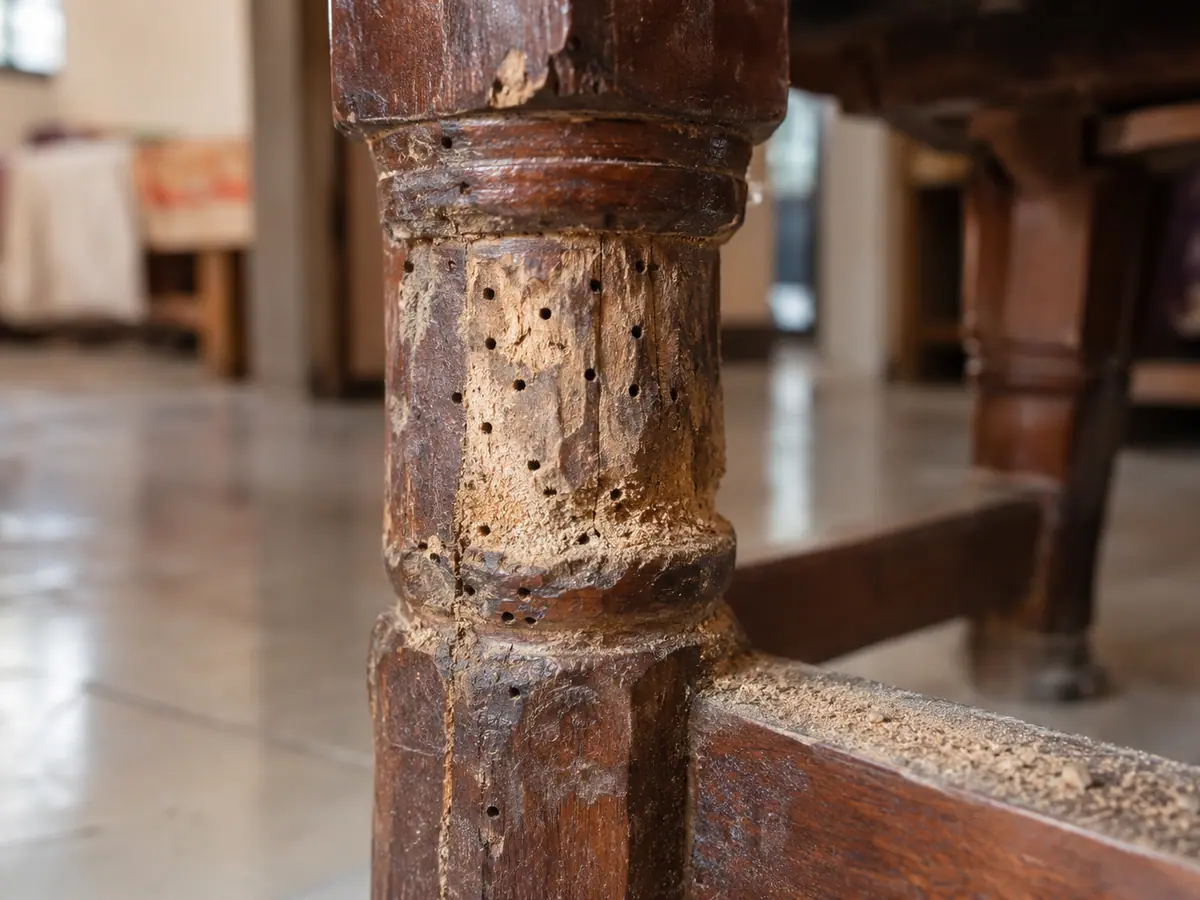
Fine wood powder under a wooden table leg

Small round holes in wood

Small round holes in wood are usually exit holes created when adult beetles emerge from infested timber. Hole shape and diameter can help a pest-control technician identify the beetle group. These openings are emergence holes, not entrance holes.

Fresh powder or frass

Fresh powder or frass beneath furniture, floorboards, beams, or wooden frames can indicate recent insect activity. Frass contains wood fragments and insect waste. Its texture may be fine, gritty, coarse, or tightly packed, depending on the wood-boring beetle.

Weak or crumbling timber

Weak or crumbling timber may contain concealed larval galleries. Wood-borer larvae feed below the surface, remove usable wood material, and reduce timber strength. Brittle edges, hollow-sounding areas, and damaged sapwood require careful assessment.

Beetles near furniture or windows

Adult beetles near furniture or windows may have recently emerged from wooden articles. Some adults move toward light and collect on windowsills. A specimen can help confirm whether the insect came from timber or entered from outdoors.

New holes in cleaned areas

New holes in cleaned areas provide stronger evidence of current activity than old holes alone. Fresh frass, emerging adults, and newly documented exit holes can support an active infestation assessment. Historic holes do not independently prove that larvae remain alive.

What Are Wood Borers?

Wood borers are insects whose larvae develop and feed inside wood. Their life cycle includes egg, larval, pupal, and adult stages. The concealed larva creates galleries and causes most internal damage, while the adult creates an exit hole when it leaves the timber.

Wood-boring beetles and termites are different insect groups. Each pest produces different evidence and requires a separate identification and control plan.

Powderpost beetles

Powderpost beetles commonly attack seasoned hardwood and starch-rich sapwood. Oak, ash, walnut, mahogany, bamboo, and suitable wood products may support development. These beetles are associated with small round holes and fine, powder-like frass.

Deathwatch beetles

Deathwatch beetles are commonly associated with older, damp, or partially decayed timber. They may attack softwood where elevated moisture and fungal decay are present. Their frass is usually more gritty than the fine powder produced by some powderpost beetles.

False powderpost beetles

False powderpost beetles can infest hardwood, bamboo, and manufactured wood products. They generally produce comparatively larger holes, and their frass may remain tightly packed inside larval galleries.

Other wood-boring beetles

Longhorn beetles and other borers may emerge from logs, firewood, stored lumber, or timber brought indoors. Some species attack living or declining trees rather than dry structural wood. Correct identification determines whether localized treatment, item treatment, or a wider structural response is appropriate.

Where Infestations Are Commonly Found

Wood-boring beetles can remain concealed in timber until exit holes or frass become visible. Our inspection can cover:

  • Tables, chairs, wardrobes, cabinets, antiques, and decorative wooden items
  • Door frames, window frames, mouldings, panels, and architraves
  • Floorboards, hardwood flooring, plywood, wall panelling, and skirting
  • Roof beams, rafters, joists, girders, and other structural timber
  • Stored lumber, bamboo articles, scrap timber, and firewood
  • Warehouses, workshops, furniture facilities, hotels, offices, and retail premises

Infested furniture and stored wood can introduce beetles into a property. Some species can reinfest suitable bare timber when pores, cracks, or old holes remain available for egg laying.

Our Inspection Process

Property and timber assessment

Property and timber assessment starts with accessible furniture, joinery, flooring, stored wood, and structural components. The technician examines affected rooms and checks for damp conditions that may support beetle activity or fungal decay.

Evidence and activity assessment

Evidence and activity assessment examines exit-hole dimensions, frass texture, wood condition, visible adults, and signs of recent emergence. Where appropriate, a moisture meter measures timber moisture and helps locate leaks, poor ventilation, or persistently damp wood.

Pest identification

Pest identification distinguishes wood-boring beetles from termites, carpenter ants, fungal decay, and insects emerging from previously infested wood. Accurate identification prevents automatic spraying and supports a treatment suited to the pest.

Infestation mapping

Infestation mapping shows whether activity is confined to one item, distributed across several wooden components, or present in inaccessible structural areas. The technician may probe damaged wood, locate galleries, and document new exit holes.

Treatment recommendation

Treatment recommendations account for beetle species, wood type, finish, thickness, accessibility, infestation severity, and structural importance. Painted, varnished, waxed, or sealed timber may require a different approach because the finish can restrict treatment penetration.

Treatment Methods

Wood borer treatment begins after inspection confirms the likely pest, affected timber, and scale of activity. Kharadi Pest Control selects methods according to inspection findings and the directions on locally registered product labels.

Targeted timber treatment

Targeted timber treatment applies a suitable registered product to compatible, accessible bare wood. The treatment must penetrate the timber to reach susceptible areas. Sealed surfaces can limit the performance of sprays or brush-applied formulations.

Borehole or gallery injection

Borehole or gallery injection delivers treatment into accessible holes, cracks, or affected wooden components when appropriate. Technicians may drill controlled access points where the selected method, timber condition, and product label permit it.

Removal and timber replacement

Removal and timber replacement may be necessary when wood is extensively weakened or treatment cannot reliably reach the infestation. A qualified building professional should assess damaged beams, joists, rafters, and other load-bearing components. Pest control treats insects, while structural repair restores strength.

Moisture correction

Moisture correction removes conditions associated with damp timber and fungal decay. Repairing leaks, drying wood, and ventilating enclosed areas can make timber less suitable for moisture-dependent beetles.

How the Service Works

  1. Book a wood borer inspection in Kharadi.
  2. Identify the insect and examine the affected timber.
  3. Confirm whether the evidence suggests active or historic damage.
  4. Map the infestation and prepare a site-specific quotation.
  5. Treat accessible infested areas with the selected method.
  6. Explain repair, moisture-control, and aftercare requirements.
  7. Schedule monitoring or a follow-up inspection where required.

Treatment for Homes and Businesses

Residential properties

Residential treatment covers apartments, villas, renovated homes, storerooms, furniture collections, doors, flooring, and roof timber. Localized furniture treatment may be appropriate when activity is confined to a small number of movable items.

Commercial properties

Commercial treatment covers offices, hotels, shops, warehouses, workshops, and furniture facilities. Inspection findings help property managers plan access, isolate affected articles, and coordinate treatment around business operations.

Heritage buildings and valuable furniture

Heritage and valuable timber require careful identification and material-compatible treatment. Localized methods, conservation requirements, finishes, joints, adhesives, and previous repairs should be considered before work begins.

Why Choose Kharadi Pest Control?

Kharadi Pest Control provides a diagnosis-led service for homes and businesses in Kharadi, Pune.

  • Inspection by pest-identification technicians
  • Treatment selected for the insect and timber condition
  • Clear preparation, exclusion, ventilation, and re-entry instructions
  • Registered products applied according to label directions
  • Written findings or treatment details where included in the service
  • Follow-up inspection options
  • Transparent quotations based on site conditions

No responsible provider should promise permanent removal without inspecting the timber. Treatment can control insects present in treated areas, but moisture, susceptible wood, and infested incoming articles can create another infestation.

Treatment Cost in Kharadi

Wood borer treatment cost in Kharadi depends on the infestation and the work required. A site inspection allows us to quote for the affected timber instead of applying a standard price to different conditions.

Price factors include:

  • Number and size of affected items
  • Total timber area
  • Beetle species and evidence of activity
  • Localized or widespread infestation
  • Access to galleries and structural components
  • Bare or sealed timber
  • Selected treatment method
  • Repeat visits and monitoring
  • Removal, repair, or replacement requirements

Prevention and Aftercare

Wood borer prevention starts with dry, sound, and carefully inspected timber.

  • Inspect second-hand furniture, bamboo, and timber before bringing them indoors.
  • Choose properly seasoned or kiln-dried wood from a reliable supplier.
  • Repair plumbing and roof leaks promptly.
  • Ventilate damp rooms, roof spaces, and timber storage areas.
  • Seal suitable wood pores with paint or varnish after any required treatment.
  • Store firewood and scrap timber away from the building.
  • Clean previously affected areas and monitor them for fresh frass.
  • Photograph and date new exit holes to support follow-up assessment.

Kiln drying can kill insect stages present during processing, but treated wood can still become infested later if exposed to suitable beetles.

Frequently Asked Questions

What is the best treatment for wood borers?

The best treatment depends on the insect, current activity, timber type, finish, access, and infestation extent. Options may include targeted timber treatment, injection, or damaged wood replacement.

How can I tell whether the holes are active?

Fresh frass, new holes, emerging adults, and documented changes can indicate activity. Old exit holes alone do not confirm live larvae, so professional inspection and monitoring may be needed.

Are wood borers the same as termites?

No. Wood-boring beetles and termites belong to different insect groups. They create different signs and require different control strategies.

Can wood borers spread to other furniture?

Some species can reinfest suitable unfinished wood or move into a property inside infested articles. Isolate suspect items and arrange an inspection before relocating them.

Can painted or varnished wood be treated?

Paint, varnish, wax, and sealants can restrict liquid treatment penetration. An inspection can determine whether injection, item isolation, removal, or another compatible method is appropriate.

Does damaged timber need replacement?

Replacement may be necessary when damage is extensive, structural strength is affected, or treatment cannot reach the infestation. Load-bearing timber should also be examined by a qualified building professional.

Is treatment safe for occupants and pets?

Safety depends on the selected method and product. Occupants must follow the preparation, exclusion, ventilation, and re-entry instructions provided for the treatment.

How long does treatment take?

Treatment time depends on the number of affected items, timber area, access, infestation severity, and selected method. The inspection provides the information needed to estimate the service duration.

Can infestations return?

Yes. Reinfestation can occur when susceptible timber, excess moisture, unfinished wood, or infested incoming items remain present. Monitoring and preventive maintenance reduce this risk.

Arrange a Professional Wood Borer Inspection

A professional wood borer inspection can confirm the insect, locate affected timber, and separate active infestation from historic damage. Kharadi Pest Control provides wood borer inspection, furniture borer treatment, timber borer treatment, and wood-boring beetle control for residential and commercial properties in Kharadi, Pune.

Send clear photographs of the holes, frass, damaged wood, and affected item, or arrange an on-site assessment for a treatment recommendation.

Book an inspection

Call Now WhatsApp